The Invisible Hub: Why Chemistry's Best-Connected Professionals Rarely Appear on the Org Chart
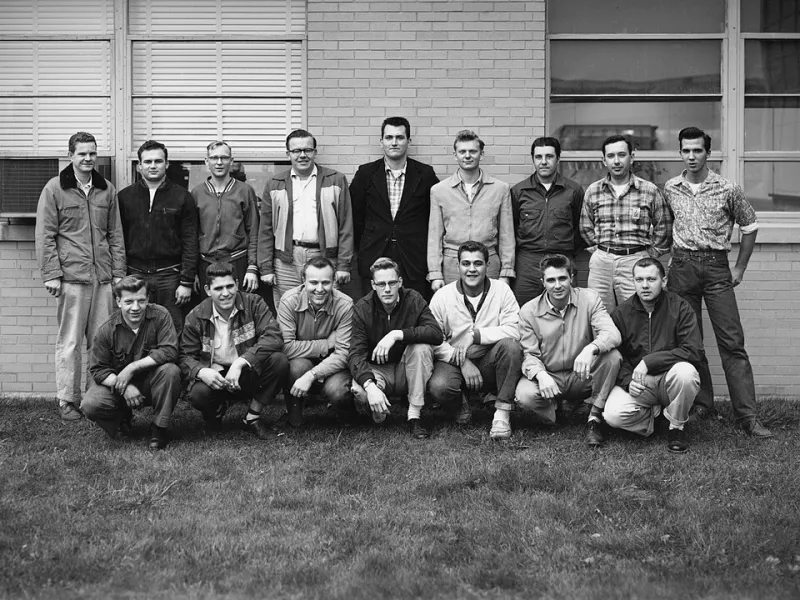
Photo: NASA Glenn Research Center, Public domain, via Wikimedia Commons
Ask a chemistry researcher who really knows how a department works, and the answer is rarely the person with the largest grant or the most impressive title. It is often the lab manager who remembers which freezer failed last winter, the technician who knows why a spectrometer drifts on humid days, or the core-facility director who has trained three generations of graduate students on the same instrument.
These professionals are hubs. They connect people, equipment, protocols, vendors, and institutional memory. Yet when departments build mentoring programs, invite speakers, organize networking events, or nominate staff for professional development, the same narrow list of credentialed researchers tends to appear. The result is a networking culture that systematically overlooks some of its most valuable members.
The Credential Filter
Formal networking in chemistry is organized around visible markers: principal investigator status, publication record, faculty rank, or industry job title. These markers are useful shortcuts, but they are poor proxies for connectivity. A lab manager may interact with every research group in a building. A core-facility scientist may support dozens of projects across departments. A technician may be the only person who knows how to operate a specialized instrument safely.
When networking lists are built from the org chart, these roles disappear. The implicit message is that professional connection is a privilege of credential, not a function of contribution. That message is both inaccurate and corrosive.
Why This Weakens Research Culture
The costs are practical. Lab managers and technicians often hold the institutional memory that prevents costly repetition. They know which vendor actually delivers on time, which safety protocol is enforceable, and which piece of equipment is held together by a calibration ritual that no manual documents. When they are excluded from professional networks, that knowledge stays local and informal.
The costs are also cultural. Early-career researchers learn quickly which roles are treated as central and which are treated as support. If technicians are never invited to seminars, never included in grant acknowledgments, and never nominated for awards, the department teaches that their work is secondary. Over time, this contributes to retention problems and to a narrower pipeline of people who see a future for themselves in the chemical sciences.
And the costs are individual. Technicians and lab managers have careers too. They need mentors, professional references, external contacts, and opportunities to learn what is happening beyond their own institution. A networking culture that excludes them leaves them dependent on a single supervisor for career mobility.
What Meaningful Inclusion Looks Like
Inclusion does not require inventing a new bureaucracy. It requires changing a few habitual practices.
First, map the real network rather than the formal hierarchy. Departments can ask who troubleshoots instruments, who trains new users, who coordinates safety, and who connects groups across floors or buildings. Those people should appear on internal contact lists and be invited to cross-departmental meetings.
Second, include lab operations staff in external engagements. When a partner lab visits, when a company sends a technical team, or when a conference delegation is assembled, the people who run the facilities should be in the room. They often ask the questions that researchers miss.
Third, fund professional development beyond the PhD track. Conference travel, vendor training, management courses, and certification programs should be available to technicians and lab managers, not only to graduate students and faculty. A department that invests in the visibility of its operational staff is investing in its own reliability.
Fourth, credit contributions explicitly. Acknowledgments, annual reports, safety awards, and equipment-related publications should name the people who made the work possible. Credit is not merely symbolic. It is evidence for the next job application.
Fifth, create visible mentoring structures. A lab manager with fifteen years of experience can mentor a new technician just as a faculty member mentors a postdoc. Departments should formalize those relationships rather than leaving them to chance.
A Corrective, Not a Charity
The argument here is not that every networking event must include every role, or that credentials do not matter. Specialized expertise matters. The argument is that chemistry's professional networks are currently organized around a narrow definition of who counts as a professional.
That definition is costing the field. It weakens onboarding, slows troubleshooting, narrows career pathways, and reinforces hierarchies that have little to do with scientific contribution. The corrective is not charity. It is a more accurate picture of how chemistry actually works.
The people who run the lab are not peripheral to the scientific enterprise. They are among its most connected nodes. A profession that claims to value collaboration should start by noticing them.