Publish and Be Ignored: Why Your Chemistry Career Needs a Public Identity in 2025
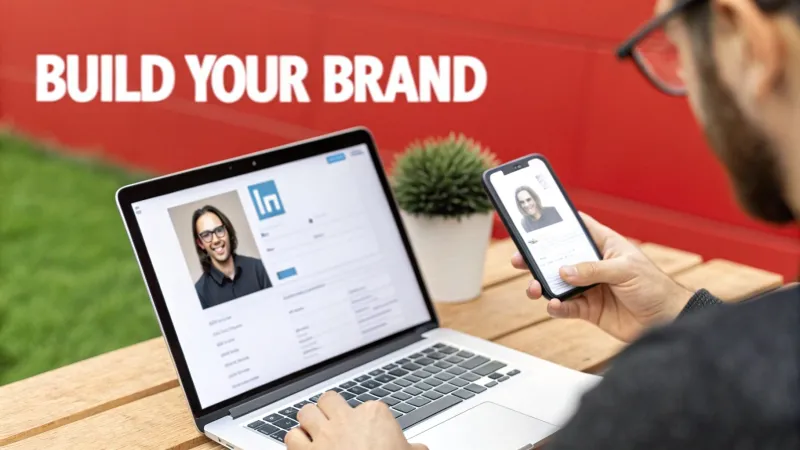
Photo: young chemist professional networking laptop LinkedIn personal branding, via cdn.outrank.so
Let us dispense with the discomfort first. Many chemists were trained to believe that good work speaks for itself, and that self-promotion is somehow unseemly — a distraction from the bench. That belief was always partially wrong, and in 2025 it is professionally dangerous.
The reality: hiring managers at US chemical companies now routinely review candidates' online presence before a first interview. Grant reviewers look up early-career investigators. Conference organizers scout speakers through LinkedIn and professional society channels. A chemist with a strong publication record but zero public footprint is increasingly invisible to all of them.
Here is a practical playbook, ordered by effort and payoff.
Step 1: Fix LinkedIn Before Anything Else
LinkedIn is not optional. It is where US recruiters in pharma, materials, and specialty chemicals actually search. Three things matter most:
- A headline that states your functional identity plainly ("Analytical Chemist | LC-MS Method Development | FDA-Regulated Environments"), not a version of your job title alone.
- An About section written for a human reader, in plain language, describing the problems you solve.
- Complete experience entries that name techniques, instruments, and outcomes — the literal keywords recruiters filter on.
Thirty minutes of editing here outperforms months of posting elsewhere.
Step 2: Translate, Don't Dumb Down
The single most common failure mode is writing for peers instead of for the audience you actually need. A recruiter at a coatings company does not care about your ligand framework; they care that your work improved adhesion durability by some percentage under conditions their customers face.
A useful exercise: for every project, write one sentence a non-chemist could understand, one sentence a chemist outside your subfield could understand, and one sentence for the specialist. Use all three in different contexts.
Step 3: Share the Failures (Strategically)
Nothing builds credibility faster than a well-told negative result. A short post explaining why a synthesis route failed, what you ruled out, and what you would try next demonstrates judgment — the quality hiring committees struggle to assess from CVs. Keep it professional, never confidential, and always frame it as learning.
Step 4: Pick One Conference and Work It Deliberately
Conference visibility is a brand channel, not just a travel perk. Submit the poster. Ask the question from the floor. Introduce yourself to three people whose work you cite. The chemists who get invited onto collaborations and panel discussions are rarely the smartest people in the room — they are the ones who made themselves identifiable.
Step 5: Choose a Cadence You Can Sustain
One substantive post every two weeks beats daily content abandoned in March. Write about a paper you admired, a technique you mastered, a conference takeaway. Comment thoughtfully on posts in your subfield; comments are how strangers discover you exist.
The Uncomfortable Bottom Line
No one gets hired for their personal brand. But plenty of qualified chemists get filtered out for the absence of one. In a field where thousands of qualified applicants chase every industrial opening, the question is not whether your elements should be visible — it is whether you can afford to keep them a secret.