Strangers With Benefits: Why the Chemists You Barely Know May Be Your Greatest Career Asset

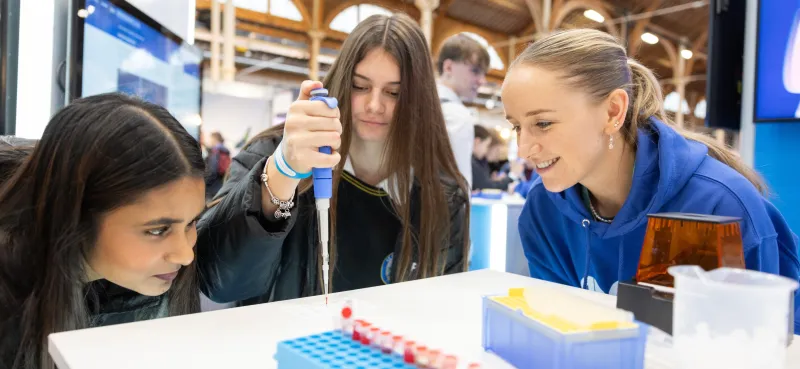
Photo: professional networking chemistry conference scientists talking, via aussiecareerinsights.com
There is a particular kind of professional relationship that most chemists instinctively undervalue: the contact you have not spoken to in eighteen months, the LinkedIn connection whose face you cannot quite place, the graduate school peer who pivoted to regulatory affairs while you stayed in synthesis. These relationships feel thin, almost negligible, compared to the deep bonds forged with labmates over years of shared failures and breakthroughs. Yet decades of network science suggest that these so-called weak ties are not peripheral to career success—they are, in many cases, its engine.
Sociologist Mark Granovetter first articulated this counterintuitive insight in his landmark 1973 paper, "The Strength of Weak Ties," demonstrating that loosely connected acquaintances consistently outperform close friends as conduits for new information and opportunity. The logic is elegant: your inner circle largely knows what you know. They inhabit the same professional world, read the same journals, attend the same seminars. It is the distant contact—the one embedded in a different corner of the chemical sciences—who carries genuinely novel intelligence.
For chemists navigating an increasingly fragmented professional landscape, this finding has profound practical implications.
The Silo Problem in Chemical Sciences
Modern chemistry is, paradoxically, both more interconnected and more siloed than at any previous point in its history. Subdisciplines have proliferated to the point where a medicinal chemist and a materials scientist may share a departmental hallway yet operate in largely separate professional universes—different conferences, different journals, different LinkedIn subgroups. Within academia, the pressure to publish within recognized disciplinary boundaries further reinforces these invisible walls.
The consequences for career development are significant. When professionals draw exclusively from their immediate networks for job leads, collaboration ideas, or industry intelligence, they are, in effect, sampling the same limited information pool repeatedly. The result is a kind of professional echo chamber that feels comfortable but functions poorly as a source of genuine opportunity.
Dr. Renata Osei, a computational chemist who transitioned from a postdoctoral position at a Big Ten university to a senior role at a specialty materials firm in Ohio, describes the moment her career shifted: "I got the introduction through someone I had met exactly once—at a poster session in San Diego three years earlier. We had exchanged maybe twenty words. But she remembered my work, and when her company opened a position, she thought of me. My closest colleagues had no idea the role even existed."
Her experience is not unusual. It is, according to network researchers, statistically predictable.
What Weak Ties Actually Do
Understanding the mechanism behind weak ties helps explain why they are so disproportionately valuable. Strong ties—close colleagues, advisors, longtime collaborators—tend to cluster. They form dense networks in which everyone is connected to everyone else, which is socially satisfying but informationally redundant. Weak ties, by contrast, function as bridges between otherwise disconnected clusters. They are the conduits through which information travels from one professional world into another.
In practical terms, this means that a former labmate now working in biotech carries intelligence about hiring trends, emerging technologies, and organizational culture that simply does not circulate within a traditional academic chemistry department. A conference acquaintance at a federal agency understands grant priorities from the inside. A LinkedIn contact at a startup knows which platforms are scaling and which are quietly struggling.
None of this information flows reliably through strong ties alone—because strong ties, almost by definition, are concentrated in a single professional cluster.
Dr. Marcus Ellerbee, a polymer chemist who now advises early-stage chemical companies in the Research Triangle, frames it this way: "The people who have helped me most in my career are the ones I had to work a little to remember. That sounds strange, but it is consistently true. The relationships that felt almost too casual to maintain turned out to matter enormously."
The Deliberate Cultivation of Peripheral Relationships
Recognizing the value of weak ties is one thing; systematically cultivating them is another. For chemists accustomed to depth-first professional relationships built around shared research, the shift in mindset requires deliberate effort.
Several strategies have proven particularly effective within the chemical sciences community.
Attend conferences as an information-gathering exercise, not a reunion. The instinct at events like the American Chemical Society National Meeting or the Society of Chemical Industry's annual gathering is to gravitate toward familiar faces. Resisting that pull—spending at least a portion of each day in conversations with unfamiliar attendees—is one of the most productive investments a chemist can make. Even a brief, substantive exchange can establish a weak tie that persists for years.
Treat digital platforms as a long-term relationship infrastructure. A connection request sent after a conference introduction is not a transaction—it is the beginning of an information channel. Periodic, low-stakes engagement (a thoughtful comment on a publication announcement, a brief message about a shared interest) maintains the tie without demanding significant time investment.
Cross disciplinary lines intentionally. Joining a professional working group outside your primary subdiscipline, attending a seminar series in an adjacent field, or volunteering for a cross-functional committee at your institution are all mechanisms for generating weak ties in professional clusters you would not otherwise enter.
Re-engage dormant connections strategically. Network science distinguishes between weak ties and dormant ties—relationships that were once stronger but have faded. Research by organizational psychologist Adam Grant suggests that dormant ties carry unique value because they combine the information diversity of weak ties with a residual sense of shared history that makes reactivation feel natural rather than transactional. A brief, genuine message to a former colleague—referencing a specific memory or acknowledging their recent work—can reactivate a dormant tie with minimal effort.
The Structural Opportunity for Chemistry Platforms
For professionals operating within networked communities like ChemsConnect, the architecture of the platform itself becomes a tool for weak-tie generation. Unlike the dense clusters that form naturally in department hallways or research group Slack channels, a broadly connected professional network spanning academia, industry, government, and the startup ecosystem creates precisely the bridging conditions that weak-tie theory predicts will generate opportunity.
The chemist who engages across disciplinary categories—reading articles outside their specialty, participating in discussions initiated by professionals in adjacent fields, connecting with members whose career trajectories differ from their own—is, in effect, building the kind of structurally diverse network that network science consistently associates with career resilience and upward mobility.
Rethinking Professional Capital
The dominant metaphor in professional development has long been depth: deep expertise, deep relationships, deep institutional knowledge. These qualities remain genuinely valuable. But network science adds a second axis—breadth—that chemistry professionals have historically underweighted.
The chemists who navigate career transitions most successfully, who find themselves considered for opportunities before those opportunities are publicly advertised, who encounter the right collaboration at the right moment, are rarely those with the largest inner circles. They are, more often, the ones who have maintained a sprawling, loosely connected web of professional relationships across the full geography of the chemical sciences.
In a discipline defined by the interactions between unlike elements, perhaps it should not surprise us that the most productive professional chemistry often happens at the periphery.